

El arte rupestre del Curutaran
Barra lateral del artículo
Contenido principal del artículo
Resumen
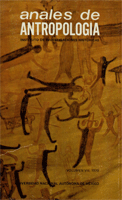
Este trabajo tiene como objetivo mostrar algunas pinturas rupestres descubiertas en 1968 por los autores en el cerro de Curutaran en Michoacán, y que representan a varias figuras de cazadores y brujos, así como algunos animales como coyotes, iguanas, zorros, entre otros. Se cree que estos petroglifos se crearon con la intención de atraer a los animales que ahí se representan, como una especie de atracción mágica para facilitar su cacería. Por otra parte, Horcasitas y Miranda creen que son más tempranas que el origen de la agricultura en ese sitio, hacia el año 1000 a. C.
Descargas
Detalles del artículo
Citas en Dimensions Service
Esta revista usa una licencia CC del tipo CC BY-NC-ND 3.0. Se maneja bajo el esquema de acceso abierto, con una licencia Creative Commons Attribution-NonCommercial-NoDerivs 3.0 Unported.